


With exams looming and the clock ticking, panic sets in as you realise there's not enough time to review everything. You're drowning in notes, textbooks, and study guides, unsure where to focus your limited hours. The pressure intensifies, and studying at the last minute feels pointless.
The most effective solution? Using past papers strategically. They are your proven shortcut for strategic, last-minute revision. They reveal exactly what examiners want, help you prioritise high-yield topics, and build exam confidence fast. This guide breaks down four simple, practical ways to use previous papers effectively, even when time is tight.
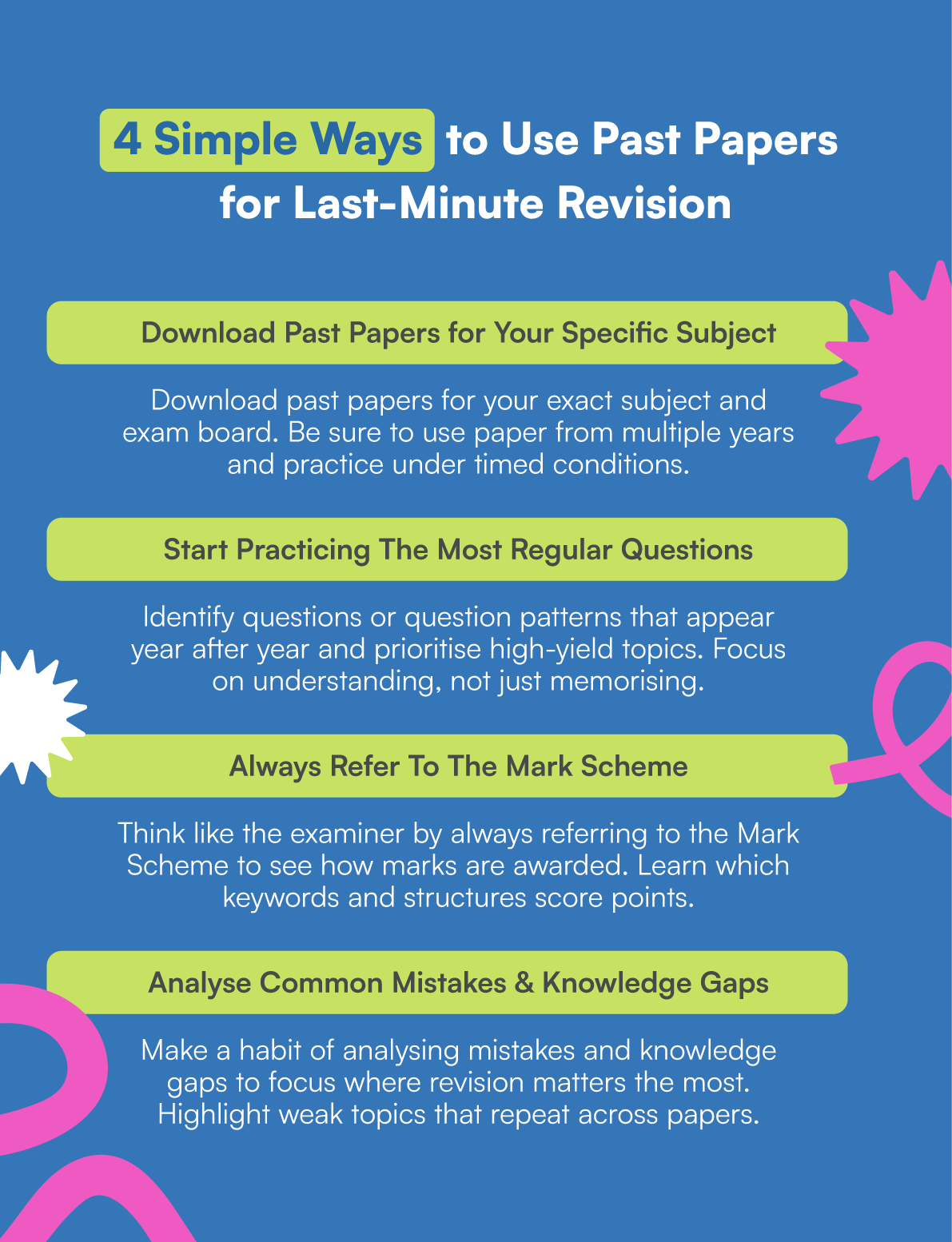
Step 1: Download Past Papers for Your Specific Subject
Begin by collecting and downloading the past paper questions that match your chosen subject and exam board from the CIE Past Papers website. Focusing on the exact papers for your subjects ensures your revision is targeted and relevant.
Try to download papers from multiple years. This helps you spot recurring question patterns, common command words, and any changes in examiner emphasis over time. Practising with these papers under timed conditions and checking your answers against the mark schemes not only improves your exam technique but also boosts your confidence.
This simple step builds confidence and sets a solid foundation for structured, effective revision.
Step 2: Start Practicing The Most Regular Questions
Once the papers are ready, focus on questions that appear again and again. Flip through and prioritise high-yield topics that pop up every year. Instead of heavy rote learning, focus on conceptual understanding by answering past prompts that repeat.
This exam training helps you familiarise yourself with subject-specific command words and tricky exam-style questions. Use a checklist to track your progress, ensuring you build confidence, improve exam technique, and master managing your time well before the real exam arrives.
Step 3: Always Refer To The Mark Scheme
Think mark scheme analysis as a direct line to the people who mark the exams. It shows how marks are awarded and what examiners are looking for in each response. Compare answers to spot gaps in knowledge and refine structure using the right command words.
This analysis shifts revision away from rote learning toward a clear, focused understanding. Over time, it sharpens exam technique, improves time management, and builds confidence for the real exam.
Step 4: Analyse Common Mistakes & Knowledge Gaps
The final step is all about reflection. Don't just check your answers, compare them carefully with the mark scheme to identify where you went wrong and which concepts are still unclear. These gaps often appear repeatedly across past papers, making them easy to target in your revision.
After this, spend some time reviewing each mistake, then follow up with focused practice or quick clarification from a teacher or peer. This turns errors into a powerful learning tool and helps you feel more confident, prepared, and sharp for exam day.
Why Choose CIE Past Papers for Past Papers?
- Organised Access to All Past Papers: Find all past papers for your subject in one convenient, structured platform. CIE Past Papers makes everything easy to locate and download, saving time and keeping your revision focused.
- Comprehensive Mark Schemes: Find detailed mark schemes for each past paper question, showing exactly how the marks are awarded. This makes it simple to understand the examiner's expectations, allowing you to improve your answers and correct common mistakes.
- Examiner Reports for Insight: Access examiner reports for every paper to see common student errors, what examiners look for in top answers, and tips to avoid pitfalls.
- Exam Timetable Feature: Plan revision and exam days effectively with the Timetable feature. By selecting the year, exam sessions, country, grade, and subject, students can instantly view accurate exam schedules anytime in a clear, organised format.
After this, spend some time reviewing each mistake, then follow up with focused practice or quick clarification from a teacher or peer. This turns errors into a powerful learning tool and helps you feel more confident, prepared, and sharp for exam day.
Conclusion
Utilising former papers effectively boils down to 4 simple steps: Download the right papers, focus on recurring exam questions, check answers against the mark scheme, and learn from students' mistakes.
This method helps students revise effectively without feeling rushed or lost. Earlier paper practice helps in sharpening exam technique, identifying knowledge gaps, and building confidence under timed conditions. Stay calm, trust the process, and treat each paper as exam training. Small, focused steps can still lead to exam success.
Frequently Asked Questions
Start using old papers under timed conditions to simulate real exam conditions. Review the mark scheme thoroughly to understand how marks are awarded. Focus on command words, track your progress, and identify gaps in your knowledge through active recall techniques and a spaced repetition schedule.
Past papers help students familiarise themselves with exam formats, question styles, and command words used by the exam board. They reduce surprises on exam day and improve exam technique by showing how marks are awarded in the real exam.
Start by checking answers against the mark scheme. Note where marks were lost and why. This process highlights knowledge gaps, improves answer structure, and helps students understand exactly what examiners are looking for in each response.
Focus on high-yield topics and recurring exam questions. Use short mock exam simulations under timed conditions. Review mistakes immediately and prioritise weak areas instead of redoing every paper to keep revision efficient and calm.
The 3/2:1 rule divides study time into three parts of learning, two parts of practice, and one part of review. Using past paper practice in this cycle supports effective revision and prevents passive memorising close to the exam.
Past papers are powerful but not the only study method. They work best when combined with concept review and spaced repetition schedules. Relying only on past papers may limit deeper understanding, but they are highly effective close to exam day.
This strategy involves reviewing material after two days, three days, five days, and seven days. The spaced repetition schedule improves long-term retention and reinforces learning gained from past paper practice.
Quality matters more than quantity. Completing three to five past exam papers per subject is usually sufficient if reviewed properly. Focus on learning from mistakes, analysing mark schemes, and refining exam technique.
Identify predictive question patterns across papers from previous years. Topics that appear frequently are often high-yield. Tracking these patterns helps prioritise revision and focus on areas most likely to appear in the real exam.
Time management is critical. Practising under timed conditions improves pacing, reduces exam stress, and helps students handle long questions effectively while ensuring enough time to review answers.